.png)


Newborn Clothes You Actually Need (No Overbuying!)
Updated: Apr 18

It is so easy to end up with drawers full of tiny outfits that your baby NEVER wears.
Preparing baby clothes can be one of the most exciting parts of getting ready for a newborn.
You might walk the store aisles or scroll through Amazon late at night, looking at all the cute, tiny little outfits and imagining your baby wearing them.
You picture how small they’ll be, how sweet they’ll look, and how special those first days will feel.
Everything looks adorable, and everything feels tempting.
But there is often a lot of confusion around newborn clothing: sizing, weather preparation, layering, comfort, and the sheer number of options available.
And here’s the not-so-fun truth that many parents don’t realize until after their baby arrives: newborns actually need far fewer clothes than most people think.
That realization can be a relief for your budget, but even more importantly, it can reduce stress and decision fatigue during an already overwhelming season.
This post focuses on practical, comfortable, real-life newborn clothing, what babies actually wear day to day, what makes life easier for parents, and what you can confidently skip.
What Newborns Actually Wear Most Days
If there is one guiding principle for newborn clothing, it’s this: comfort should always come before cute.
Think about how your newborn spends their time. In those early weeks, babies are mostly sleeping, eating, being held, and getting diaper changes.
That’s it.
They aren’t crawling, walking, or playing outside.
They’re adjusting to the world and spending most of their time close to you.
When you go to bed at night, you probably reach for your softest, stretchiest, most comfortable pajamas.
If your baby is essentially living that same “sleep mode” 24/7 in the beginning, it makes sense that their clothing should reflect that too.
Soft fabrics, stretchy materials, and outfits that are easy to get on and off matter far more than style.
Comfort helps your baby settle more easily, and simplicity helps you move through your day with less friction.
How Often Do Newborns Really Need Outfit Changes?

This varies by baby and even by day, but one thing is consistent: newborns can be messy.
Spit-up after feeds is common. Blowouts and leaks happen, sometimes more often than you’d expect.
Some babies spit up constantly, while others rarely do. Some have frequent diaper leaks, while others don’t.
With my own children, I experienced all of it; one baby rarely spit up, another soaked through outfits daily, and one had blowouts far more often than I was prepared for.
The point is not to predict your baby’s habits perfectly, but to prepare enough without going overboard.
When you’re getting ready, aim for enough clothing that you’re not forced to do laundry every single day, but not so much that drawers are overflowing with outfits that never get worn.
You’ll learn your baby’s patterns quickly and can adjust from there. It's safe to start off with around 6-8 sleepers allowing for about 1 per day.
A Reality Check on Newborn Sizing

Every baby is different at birth, and every baby grows at a different pace.
Some babies fit into newborn sizes for weeks, or even months.
Others skip newborn sizes almost entirely and move straight into 0–3 month clothing.
Because of this, it’s best to start with a small mix of newborn and 0–3 month clothes rather than stocking up heavily on just one size.
It’s also helpful to know that clothing age labels don’t tell the whole story.
Relying on size alone can easily lead to buying the wrong fit for your baby. Many brands size differently, so checking each brand’s height and weight guidelines is often more accurate than going by age alone.
I’ve definitely fallen into this trap myself, buying an outfit based on age, only to realize my baby was too long for it.
You can also take your doctor’s growth estimates into account toward the end of pregnancy. These measurements, which are more commonly done in the later weeks, give you a general idea of how your baby is growing and an estimate of their birth weight.
While they’re not perfect, I’ve personally found my doctor’s estimates to be fairly accurate and helpful when deciding what sizes to have on hand in the beginning. They offer a realistic starting point without overcommitting to one size too early.
It can be tempting to buy a large newborn wardrobe, but babies grow incredibly fast, and many outfits never get worn before they’re outgrown.
Starting with fewer pieces gives you flexibility, saves money, and prevents wasted purchases, while still making sure you’re prepared for those early weeks.
Newborn Clothing Essentials (What You’ll Actually Use)
Sleepers / Footed Pajamas

This is the clear number one and what my newborns lived in.
Sleepers are simple, comfortable, and easy to manage, especially during nighttime diaper changes.
Zip-up sleepers are far superior to snap versions, particularly in the middle of the night. Many sleepers now have double zippers, which allow you to unzip from the bottom for diaper changes without fully undressing your baby.
Some sleepers use magnetic closures, and while many parents love them, I personally chose to avoid them. I wasn’t comfortable with magnets directly against my baby’s body. This really comes down to personal preference.
Sleepers work so well because they are one piece, cozy, and functional. They’re perfect for sleeping, daytime wear, and even outings.
They also make packing a diaper bag easier; grabbing one outfit instead of multiple pieces simplifies everything.
When choosing sleepers, look for soft materials like cotton or bamboo blends that are gentle on sensitive newborn skin.
I loved these Carters Purely Soft pajamas. They have lots of options and are super soft, stretchy, and lightweight.
Onesies / Bodysuits

Onesies are another newborn staple, especially if you want a more “real clothes” look instead of pajamas.
They are slightly more complicated for diaper changes compared to sleepers, but they offer more variety in colors and patterns.
When choosing onesies, look for envelope necks or front-opening designs, which make changing easier, especially if you ever need to pull an outfit down instead of over your baby’s head.
You can find short-sleeve or long-sleeve options depending on the season, and they’re often sold in multipacks or coordinated sets with pants.
Pants or Leggings

Pants and leggings are more optional during the newborn stage, but having a few pairs can be helpful if you want to complete an outfit with a onesie.
I wouldn’t recommend buying many of these early on. One or two pairs is usually plenty.
Newborns don’t move much, and pants can sometimes feel like extra work during diaper changes. Still, they can be nice to have for family gatherings, photos, or outings.
Socks or Booties
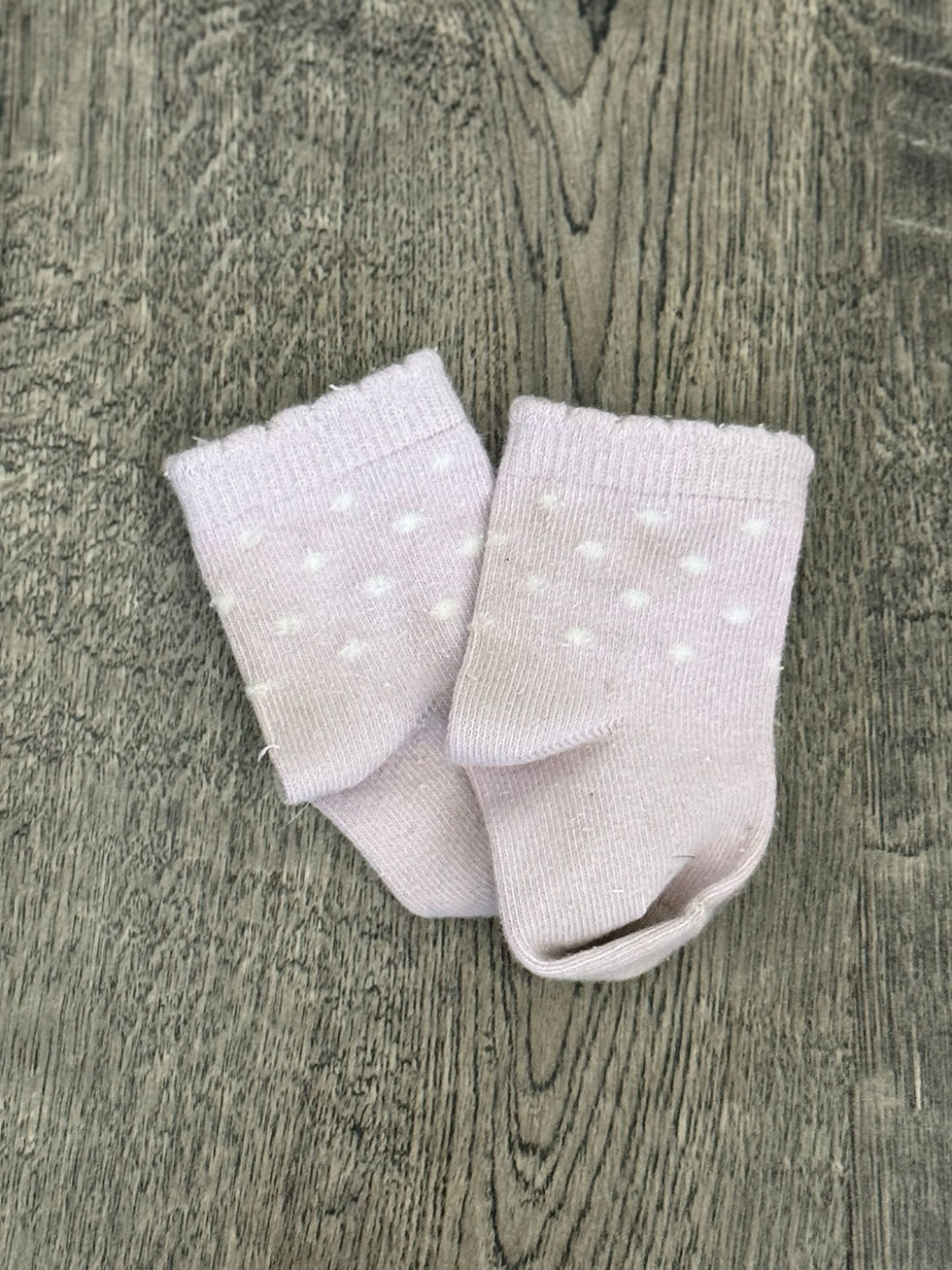
If your baby mostly wears footed sleepers, socks aren’t strictly necessary.
However, some sleepers stop at the ankle, and newborn feet can get cold easily, especially in cooler weather or air-conditioned homes.
I generally prefer socks over booties because they tend to stay on better. Some booties with Velcro or wrap closures do work well, but they often get kicked off quickly.
Hats

Hats can be useful during the first few weeks of life, especially for babies born in colder seasons.
Newborns have a harder time regulating their body temperature, so hats can help keep them warm during outings.
That said, hats are typically not needed long-term if your baby is indoors, and they should not be used for sleep due to overheating risks.
Swaddles and Sleep Sacks

While not clothing in the traditional sense, swaddles and sleep sacks are essential for newborn sleep.
They keep your baby warm and secure without loose blankets, which are unsafe.
Babies have strong preferences here. Some love being tightly swaddled, while others prefer sleep sacks that allow more movement.
It’s helpful to have one or two styles available until you learn what your baby prefers.
I liked these traditional swaddles a lot because they are lightweight, soft, and super stretchy which makes it easier to get a snug, but still comfortable swaddle.
But we also used several zip and velcro sleep sacks that worked wonderfully too.
Dressing for the Season and Your Lifestyle
How to Dress Based on Temperature
Babies can get cold fast, but they can also overheat just as easily.
A common guideline is to dress your baby in one more layer than what you’re wearing, but observation matters more than rules.
Check your baby’s chest or back rather than hands or feet, and watch for signs like sweating, flushed skin, or coolness.
Homebody vs. On-the-Go Families
Your lifestyle should guide your clothing choices.
If you plan to stay home most days, prioritize soft, cozy basics.
If you’re often out of the house, you may want a few outfits that work well for car seats, carriers, and outings.
Homes with air conditioning can also feel cooler than outdoors, so layering is helpful year-round.
Special Occasion Outfits
Those tiny dresses and baby suits are adorable, but realistically, they’re worn once, if at all.
If you have a specific event or photo planned, one special outfit is fine. Otherwise, these pieces are often expensive and quickly outgrown, making them easy to skip.
What You Can Skip Without Guilt
Some items look tempting but rarely make life easier:
Complicated outfits with lots of buttons or snaps
Shoes (they’re not walking and will kick them off)
Excessive newborn sizes
Your baby does not need a full wardrobe. They need comfort, warmth, and simplicity.
Let's Wrap This Up!
✔️Newborn clothing doesn’t need to be complicated or excessive
✔️Trust your instincts
✔️Ignore the pressure to overbuy
Remember: A small collection of comfortable, practical pieces will serve you far better than drawers full of outfits that never get worn.
✨If you want a calm, practical guide to newborn care — from clothing to feeding, sleep, and daily routines — check out Baby’s First Year Simplified, created to help parents feel confident and prepared without overwhelm.
👇 Click the link below.


Comments